Agnikarma: Ancient Fire Therapy for Pain Relief
What is Agnikarma?
Agnikarma is one of Ayurveda's most powerful para-surgical procedures — a heat-based therapy using specially designed metal tools called Shalakas to deliver controlled thermal stimulation to affected tissues. It is highly effective for chronic pain conditions including sciatica, arthritis, heel pain (Vatakantaka), and musculoskeletal disorders.
Unlike modern pain management approaches that rely on medication, Agnikarma works by stimulating the body's natural healing response through precise application of heat — no drugs, no surgery, just deep, lasting relief.
How Agnikarma Works
The procedure involves heating a Shalaka (metal rod) to the appropriate temperature and applying it briefly to the affected marma (vital) point or pain site. This creates a controlled micro-burn that:
• Stimulates blood circulation to the area
• Breaks down scar tissue and adhesions
• Activates the body's natural anti-inflammatory response
• Provides long-lasting pain relief — often after just 3–5 sessions
Choosing the Right Agnikarma Shalaka
The metal used in the Shalaka determines the depth and nature of the thermal effect. Classical Ayurvedic texts describe different metals for different conditions:
•
Tamra (Copper) Shalaka — Best for superficial conditions, skin disorders, and cosmetic applications. Copper conducts heat evenly and cools quickly, making it ideal for precise, controlled application.
•
Loha (Iron) Shalaka — Recommended for deeper musculoskeletal pain, joint disorders, and conditions requiring sustained heat penetration.
•
Rajat (Silver) Shalaka — Used for sensitive areas and conditions requiring gentle thermal stimulation.
•
Panchdhatu Shalaka — An alloy of five metals offering balanced therapeutic properties, suitable for a wide range of conditions.
Our Agnikarma Equipment
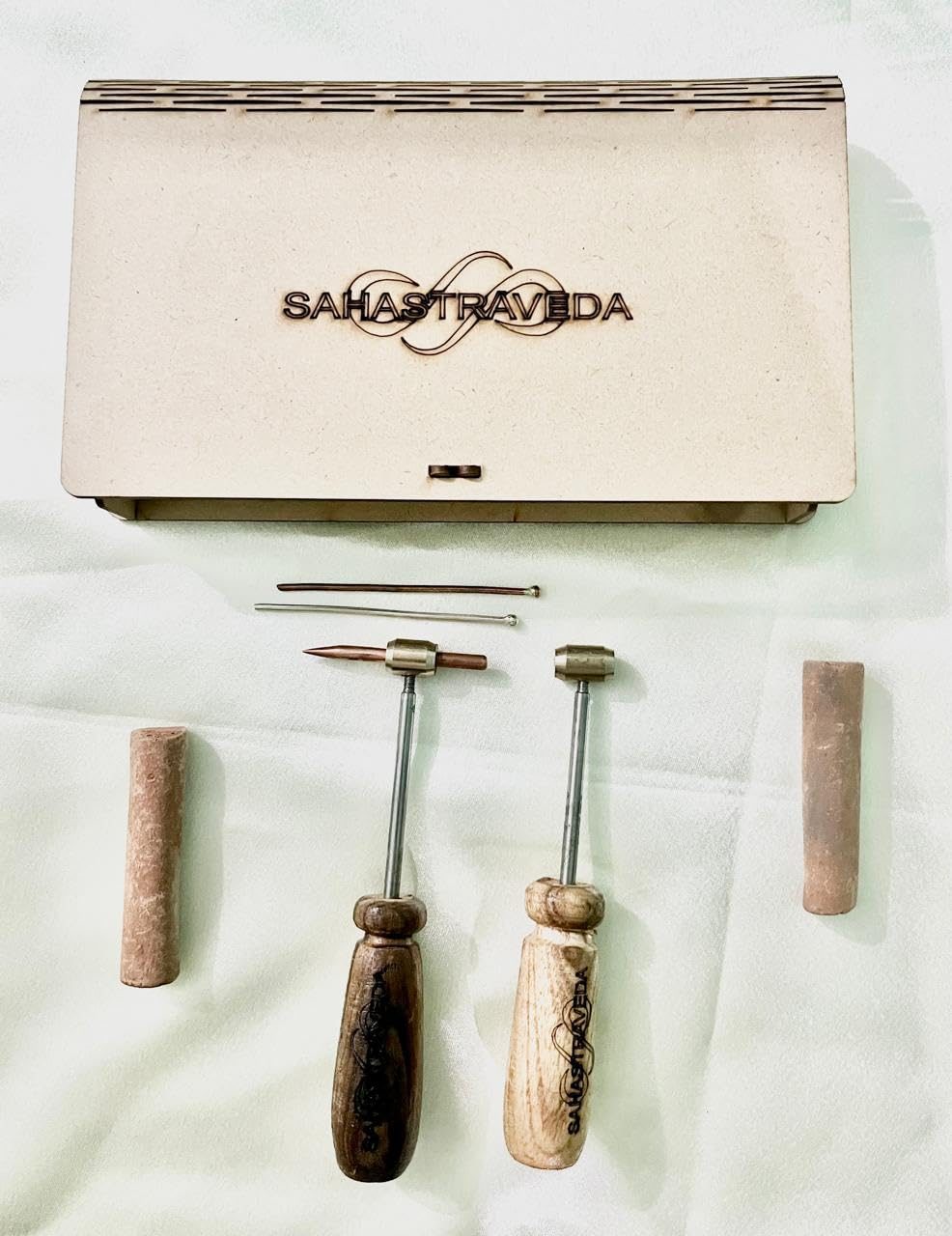
Sahastraveda manufactures professional-grade Agnikarma tools designed for clinical use. Each Shalaka is precision-crafted to classical specifications:
•
Agnikarma Shalaka Set 2.0 — Complete All-in-One Solution — Our most comprehensive set, ideal for practitioners who want to cover all conditions with a single purchase.
•
Tamra (Copper) Agnikarma Shalaka — For pain management and Swedan applications.
•
Loha (Iron) Shalaka — For deep musculoskeletal conditions.
•
Rajat (Silver) Agnikarma Shalaka — For sensitive and delicate applications.
•
Flame Gun for Agnikarma — Precise, controlled heat source for professional clinical use.
Step-by-Step Agnikarma Procedure
•
Patient preparation: Assess the patient's condition, identify the pain site, and explain the procedure. Obtain informed consent.
•
Equipment preparation: Select the appropriate Shalaka based on the condition and patient constitution (Prakriti).
•
Heating the Shalaka: Heat the Shalaka using a flame gun until it reaches the appropriate temperature — glowing red for Loha, warm-to-touch for Tamra.
•
Application: Apply the heated tip briefly (1–2 seconds) to the affected point. The patient will feel a sharp, momentary sensation.
•
Post-procedure care: Apply ghee or medicated oil to the treated area. Advise the patient to avoid cold water and heavy exertion for 24 hours.
•
Follow-up: Typically 3–7 sessions are recommended, spaced 7–10 days apart.
Safety Protocols
Agnikarma should only be performed by trained Ayurvedic practitioners. Key safety considerations:
• Never perform on patients with diabetes, bleeding disorders, or skin infections at the treatment site
• Always use sterilized equipment
• Maintain proper documentation of each session
• Keep ghee or medicated oil ready for immediate post-procedure application
• Ensure proper patient positioning to prevent accidental burns
Frequently Asked Questions
How many sessions of Agnikarma are needed?
Most conditions respond well within 3–5 sessions. Chronic conditions may require 7–10 sessions. Sessions are typically spaced 7–10 days apart to allow healing between treatments.
Is Agnikarma painful?
Patients experience a brief, sharp sensation during application — similar to a momentary sting. Most patients report significant pain relief within 24–48 hours of the procedure.
Which Shalaka is best for knee pain?
For knee pain (Janusandhigata Vata), a Loha (iron) Shalaka is typically recommended for its deeper heat penetration. The Loha Shalaka from Sahastraveda is precision-crafted for joint applications.
Can Agnikarma be used for cosmetic purposes?
Yes — Tamra (copper) Shalakas are widely used for cosmetic Agnikarma, including wart and mole removal. Our Cosmetic Tamra Shalaka is specifically designed for these applications.
Ready to equip your practice? Browse our complete Agnikarma equipment range →
]]>